If you’ve recently changed jobs, retired, or are simply reviewing your retirement accounts, you might be wondering:
“Should I roll over my 401(k) into an IRA?”
As a financial advisor working with individuals and families across Orange County, I often help clients weigh this exact decision. While there’s no one-size-fits-all answer, understanding the pros and cons can help you make a smart, strategic choice.
In this post, we’ll break down the advantages and disadvantages of rolling over your 401(k) into an IRA, and when it may make sense — or not — depending on your goals.
✅ What Is a 401(k) Rollover?
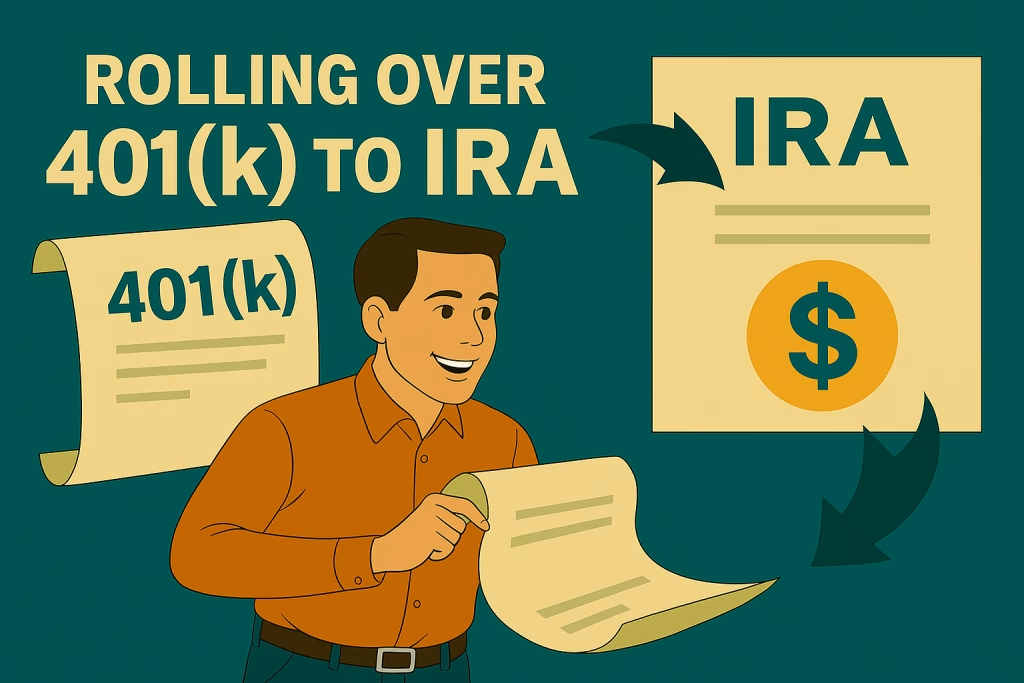
A 401(k) rollover happens when you move your retirement savings from an employer-sponsored 401(k) plan into an Individual Retirement Account (IRA) — either traditional or Roth, depending on your tax preferences.
You might consider a rollover if:
- You’re changing jobs
- You’re retiring
- You want more control over your investments
✅ Pros of Rolling Over a 401(k) to an IRA
📈 1. More Investment Choices
Most 401(k) plans offer a limited number of mutual funds or target-date options. IRAs offer a much broader range — including ETFs, individual stocks, bonds, and alternative investments — giving you more flexibility and control.
💸 2. Potentially Lower Fees
Some 401(k) plans have high administrative or fund management fees. By rolling over to an IRA, especially with a low-cost provider or a fiduciary advisor, you may reduce ongoing costs — which can significantly impact your long-term retirement savings.
📊 3. Consolidation of Accounts
If you’ve worked at multiple jobs, rolling old 401(k)s into one IRA simplifies your financial life. Fewer accounts mean easier tracking, rebalancing, and planning for retirement income.
🧾 4. Roth IRA Conversion Opportunities
Rolling into an IRA gives you more flexibility to convert traditional IRA assets into a Roth IRA over time, potentially taking advantage of lower tax years or income fluctuations.
👨👩👧👦 5. Estate Planning Benefits
IRAs often offer more flexible beneficiary options, which can be important when you’re planning for the next generation or managing a blended family situation.
⚠️ Cons of Rolling Over a 401(k) to an IRA
🛡️ 1. Loss of Certain Legal Protections
401(k)s generally have stronger creditor protection under federal law than IRAs. In California, IRAs are still protected to a degree, but depending on your situation, this could be a consideration.
🧓 2. Early Retirement Penalty Rules Change
If you leave your job after age 55 but before 59½, you can withdraw from your 401(k) without the 10% penalty. That exception doesn’t apply to IRAs — you’d have to wait until 59½ (unless you qualify for other exceptions).
🛠️ 3. Limited Access to Loans
401(k) plans may allow you to borrow against your balance, while IRAs do not. If access to a loan is important to you, this might be a drawback.
⏳ 4. Required Minimum Distributions (RMDs) May Start Sooner
If you’re still working past age 73, you can often delay RMDs from your current 401(k). With an IRA, however, you must begin RMDs at age 73 — even if you’re still working — unless it’s a Roth IRA.
🔍 Is a 401(k) Rollover Right for You?
There’s no universal answer — it depends on your unique situation, goals, and timeline.
As a fiduciary financial advisor in Orange County, I help clients:
- Analyze current fees and investment options
- Identify potential tax traps or benefits
- Create a personalized retirement strategy that balances growth, risk, and flexibility
📞 Let’s Talk About Your 401(k) Strategy
If you’ve recently left a job, retired, or are planning for retirement, don’t leave your old 401(k) on autopilot. A smart rollover strategy could make a big difference in your retirement outcome.
📅 Schedule a complimentary consultation to review your options — with no pressure or obligation.
✅ We’ll help you decide what’s best for you and your long-term goals.