
When it comes to saving money on healthcare while building long-term financial security, few tools are as powerful as the Health Savings Account (HSA). Often misunderstood or underused, an HSA offers a unique triple-tax advantage — making it one of the most efficient savings vehicles available to individuals and families.
What Is a Health Savings Account (HSA)?
A Health Savings Account is a tax-advantaged savings account available to individuals with a High-Deductible Health Plan (HDHP). It allows you to set aside pre-tax money to pay for qualified medical expenses such as doctor visits, prescriptions, and even some dental and vision costs.
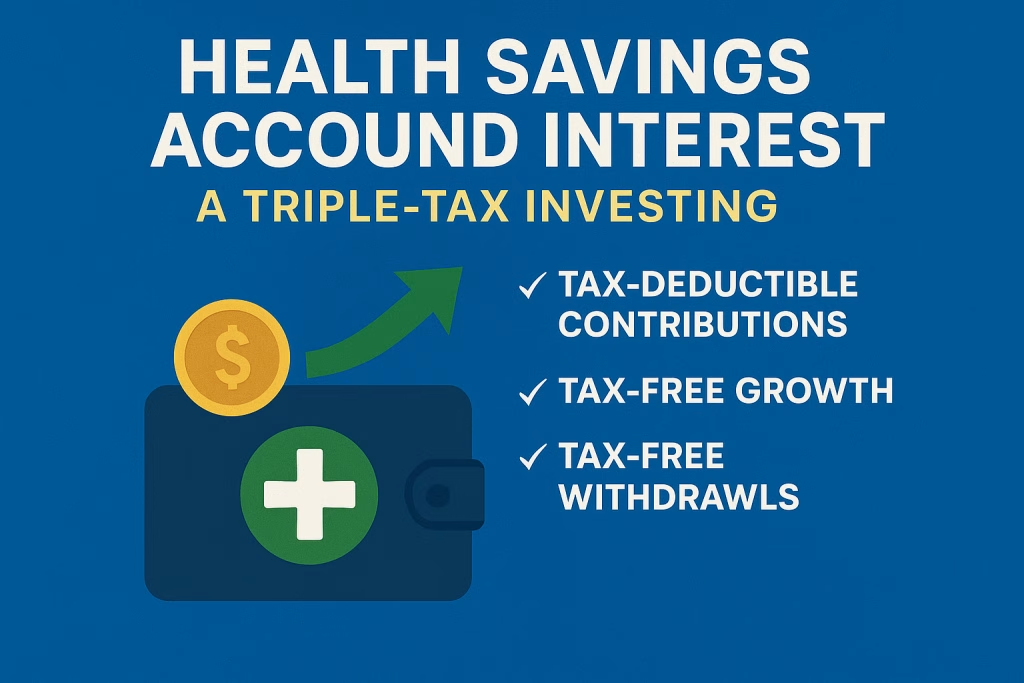
The Triple-Tax Advantage Explained
- Tax-Deductible Contributions
Money you deposit into your HSA reduces your taxable income for the year. If you contribute $3,000, you effectively lower your taxable income by the same amount. - Tax-Free Growth
Funds in your HSA can be invested in mutual funds, ETFs, or other investment options — and your earnings grow tax-free. - Tax-Free Withdrawals
When used for qualified medical expenses, withdrawals from your HSA are completely tax-free. That’s a benefit you won’t find in most other savings or investment accounts.
Who Qualifies for an HSA?
You’re eligible for an HSA if you:
- Are enrolled in a High-Deductible Health Plan (HDHP)
- Aren’t covered by another non-HDHP plan
- Aren’t enrolled in Medicare
- Aren’t claimed as a dependent on someone else’s tax return
For 2025, contribution limits are:
- $4,300 for individuals
- $8,550 for families
- $1,000 additional catch-up contribution if you’re age 55 or older
Using Your HSA as a Retirement Strategy
One of the best-kept secrets about HSAs is their retirement potential. After age 65, you can withdraw HSA funds for any purpose — not just healthcare — without penalty. While non-medical withdrawals are taxable, this effectively turns your HSA into a supplemental retirement account, similar to a traditional IRA.
By investing your HSA funds early, you can take advantage of tax-free compounding growth, helping you prepare for medical expenses in retirement — one of the biggest financial challenges older adults face.
HSA vs. FSA (Flexible Spending Account)
| Feature | HSA | FSA |
| Eligibility | Must have HDHP | Available with many employer health plans |
| Contribution Ownership | You own the account | Employer owns the account |
| Rollover | Funds roll over yearly | “Use it or lose it” each year |
| Investment Option | Yes | No |
Key Takeaway
A Health Savings Account isn’t just for covering today’s doctor bills — it’s a strategic financial tool for tomorrow. With its triple-tax benefits, long-term investment potential, and flexibility, an HSA is one of the most powerful ways to build tax-free wealth for healthcare and retirement.
Final Thoughts
Whether you’re an employee, self-employed, or planning for retirement, consider maximizing your HSA contributions each year. Over time, this simple habit can lead to thousands in tax savings and provide peace of mind when you need it most.
Interested in building a tax-efficient retirement plan that includes HSAs, IRAs, and long-term care protection?
👉 Contact Navid Wealth for a personalized financial strategy.